
7
Finding the dream wedding gown is often considered the defining milestone of bridal shopping, but the styling journey does not end at the fitting room mirror. While the dress anchors your look, accessories establish its tone, personality, and refinement. The right combination of jewelry, veils, shoes, and hair adornments pulls every element into a cohesive visual narrative. Conversely, over-accessorizing or pairing conflicting aesthetics can compete with the gown and distract from the wearer.
Approaching bridal styling requires the keen eye of an editor. Rather than accumulating pieces simply because they are traditional, focus on harmony, balance, and intentionality. By evaluating your gown’s structural lines, fabric undertones, and ornamental details, you can select finishing touches that elevate your bridal ensemble effortlessly.
Harmonizing Metal Tones With Gown Fabrics and Undertones
White is rarely just white in bridal fashion. Fabrics carry subtle undertones ranging from cool, stark tones to rich, golden warmth, and your choice of metal should align with these color temperatures. Mismatched metals can clash with the undertone of the gown, making the fabric look washed out or dulling the luster of the jewelry.
Cool, bright whites pair best with platinum, white gold, and polished silver. These metals mirror the crispness of the fabric without introducing conflicting warmth. If your gown leans toward ivory, cream, or warm champagne, yellow gold and rich rose gold provide an organic warmth that enriches the textiles. For dresses in blush, oyster, or soft cashmere hues, rose gold offers an ethereal, romantic resonance.
Beyond the base color of the fabric, examine any existing embellishments sewn into the gown. If your bodice features antique silver beading, cool-toned crystal embroidery, or gunmetal threading, introducing yellow gold jewelry can create visual discord. Match your accessories to the hardware and embroidery already present on the dress to preserve aesthetic cohesion.
Balancing Your Neckline With Jewelry Architecture
A bridal neckline establishes the architectural frame for your upper body and directly informs which jewelry silhouettes will flatter your silhouette. Attempting to wear every piece of traditional jewelry—earrings, necklace, bracelet, and ring—often results in visual clutter around the face.
Plunging and V-Necklines
A V-shaped neckline naturally draws the eye downward, creating an elongated line that welcomes intentional adornment. A delicate pendant or drop necklace that echoes the V-shape without resting directly on the fabric balances this space beautifully. If your gown has an intricate, lace-trimmed V-neck, you can omit the necklace entirely and instead wear dramatic linear drop earrings to keep the décolletage clean and modern.
Strapless and Sweetheart Cuts
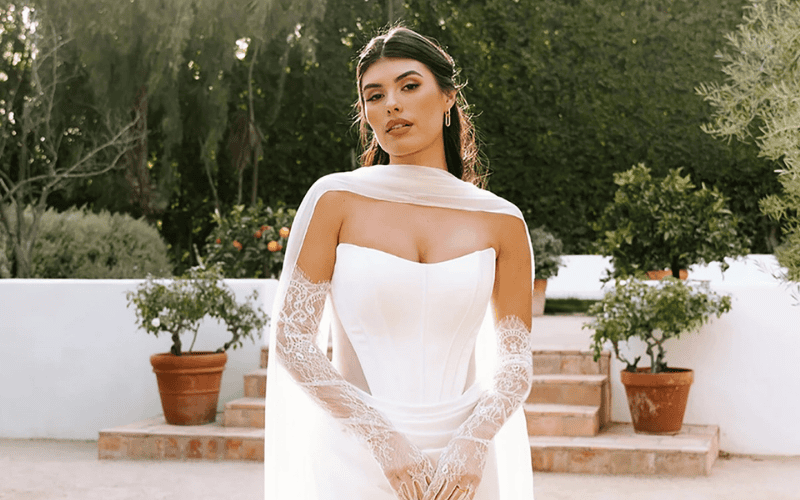
Strapless designs offer an open canvas, making them remarkably versatile. To highlight the collarbone, consider a choker, a refined collar necklace, or a classic string of knotted pearls. If you prefer a minimalist, contemporary aesthetic, leave the neckline completely bare and invest in bold statement chandelier earrings paired with a sleek cuff bracelet on one wrist.
High Necks, Halters, and Illusion Lace
Gowns with high necklines, boatnecks, or detailed illusion mesh provide built-in visual weight around the neck. Adding a necklace to these cuts inevitably creates tangling issues and visually chops up the neckline. Skip the necklace and direct attention upward with luminous pearl studs, sculptural ear crawlers, or an elaborate hairpiece that complements the lace motif.
Selecting Veils and Headpieces That Support the Silhouette
Headwear frames your face and sets the formal atmosphere for the ceremony. The primary rule when pairing headpieces and veils with your gown is proportion: your headwear should complete the silhouette, not overwhelm it.
If your dress is heavily beaded, multi-layered, or features an elaborate train, select a raw-edge or sheer tulle veil that allows the craftsmanship of the dress to show through unobstructed. A minimalist gown crafted from unadorned crepe or silk satin, on the other hand, can carry a show-stopping cathedral veil with dramatic scalloped lace edging, botanical embroidery, or scattered pearls.
Pay equal attention to how your veil interacts with your bridal hairstyle and hair jewelry. If you plan to wear an embellished bridal comb, tiara, or padded velvet headband, ensure it complements the comb mechanism of your veil. Consider how the look will transition into the evening: choose a versatile headpiece that stands on its own as a striking accent once the veil is removed for the reception.
Prioritizing Footwear That Blends Aesthetics With Endurance
Bridal footwear is as much a logistical decision as a stylistic one. Your shoes dictate how your gown hangs, where the hemline falls, and how comfortably you navigate walking down the aisle, mingling during cocktail hour, and dancing through the reception.
Choose your shoes before your first alterations appointment so the tailor can pin the hem to the exact millimeter of clearance. Floor-length ballgowns and A-line skirts hide the majority of your footwear, providing an opportunity to prioritize ergonomic block heels, platforms, or bridal sneakers. For gowns with high-low hems, front slits, or tea-length cuts, shoes become a prominent design feature. In these cases, look for satin mules, crystal-encrusted straps, or pointed-toe d’Orsay pumps that mirror the mood of your dress.
Fabric compatibility is equally important. Ensure that crystal buckles, metal settings, or prong-set gems on your shoes will not catch on delicate interior petticoats, lace overlays, or tulle under-layers as you walk.
The Art of Curating Heirlooms and Sentiment
Many brides wish to honor family traditions by incorporating vintage jewelry, a mother’s veil, or an inherited brooch. While sentiment holds immense personal value, an heirloom should feel seamlessly integrated rather than forced into an otherwise modern look.
If a sentimental piece does not align with your gown’s metal tone or style, consider creative reimagining. An antique broach can secure a floral ribbon bouquet wrap, pin inside the lining of your bodice as a discreet lucky charm, or be woven into an updo. Delicate heirloom pearls can be professionally restrung with modern hardware to bridge generational styles with contemporary bridal aesthetics.
Editing Your Final Bridal Look
When styling a bridal outfit, true sophistication lies in what you choose to leave out. Step into your complete ensemble—gown, shoes, jewelry, and veil—during your final dress fitting, and view yourself from several steps back in full natural light.
Select one or two focal points and let every other accessory play a secondary, supportive role. If your headpiece is a showpiece, dial back your earrings. If your dress is completely unembellished, let your jewelry and veil introduce texture and drama. By designing your accessories around thoughtful restraint, balance, and physical comfort, you ensure that on your wedding day, the accessories accentuate your beauty rather than outshining it.
